

How Dr. Rosa Vásquez Espinoza uses Cutting-Edge Science to Save the Bees
There are few species more critical to the Earth’s biodiversity than bees. To many, especially in the US, the European Honeybee is the most recognizable, but did you know there are over 20,000 known bee species? Due to habitat loss, invasive species, pollution, and toxic pesticides, bee species are struggling in many areas. Thankfully, there are people such as Dr. Rosa Vásquez Espinoza doing their part to help indigenous bees make a comeback.
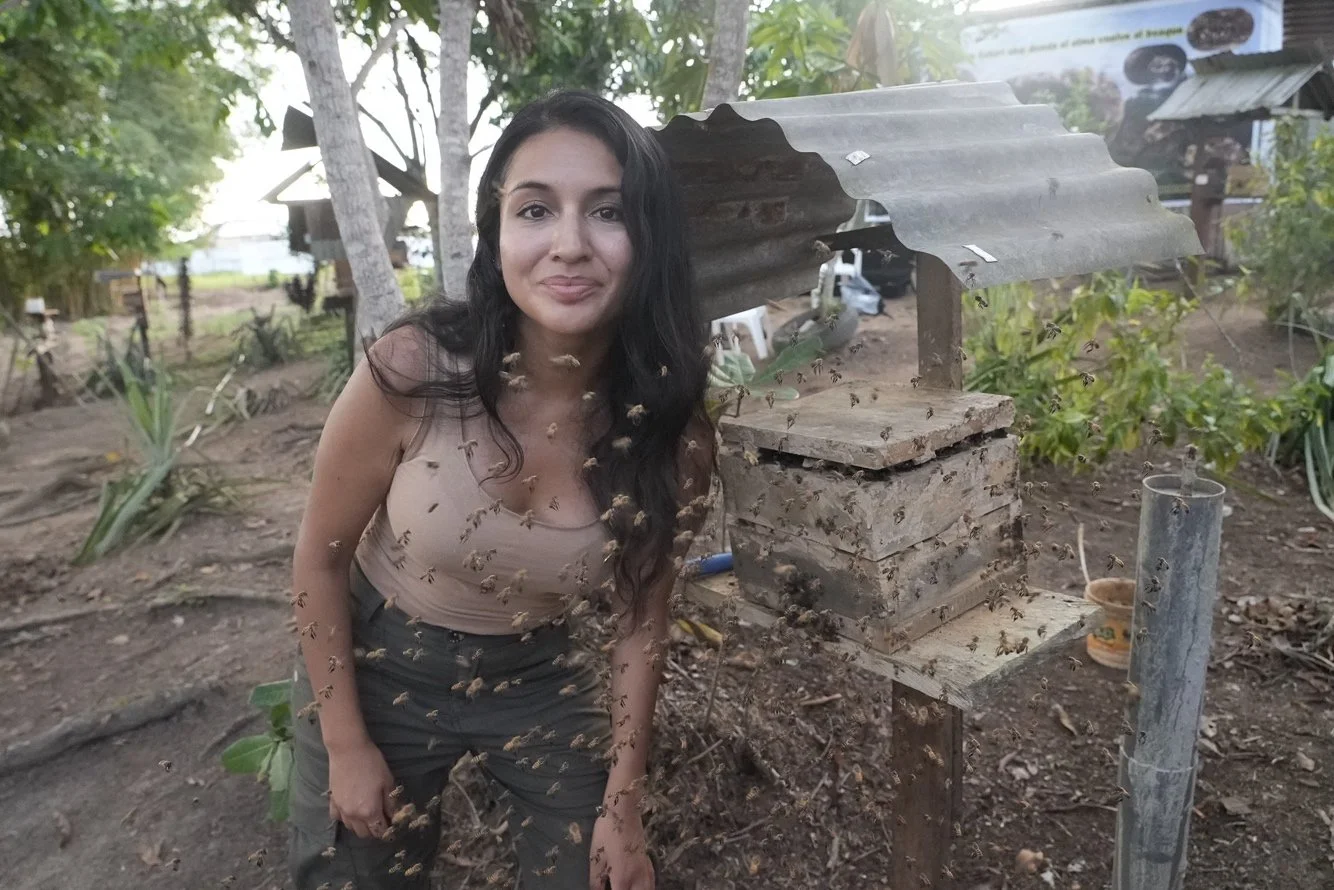
Photo by Miryan Delgado
Dr. Rosa Vásquez Espinoza is a Ph.D. chemical biologist, conservation leader, and National Geographic Explorer, leading the global movement to protect wild pollinators and the Amazon. Raised between the Peruvian Andes and the rainforest, she bridges cutting-edge science with ancestral knowledge to drive real-world environmental change. We are thrilled to share our interview with her below!
When you were beginning your Ph.D. at the University of Michigan, did you foresee yourself applying chemical biology towards conservation, or did you have a different plan at first?
Not at all. When I started my Ph.D., my world was very much inside the lab. I was fascinated by molecules, by how life works at its most invisible level. But I don’t think I have yet understood how that knowledge could extend beyond the lab bench. It was only later, when I began reconnecting more deeply with the Amazon and my own roots, that everything started to shift. I realized that chemical biology could be a bridge, a way to understand not just isolated systems, but entire living networks. Today, I still see molecules, but I see them in honey, in soil, in plant–bee interactions, in the chemistry of a forest that is constantly communicating. The science didn’t change, but the lens did.
How did you first learn about stingless bees in the Amazon Rainforest?
Through taste, actually. The first time I tried stingless bee honey, it stopped me in my tracks. It was unlike anything I had ever tasted, acidic, complex, almost alive. And that curiosity led me deeper. I started asking questions, speaking with communities, learning about how this honey is used medicinally, how it’s part of daily life, of healing, of culture. Then the science followed: their role in pollination, their evolutionary history, and their importance in maintaining the forest. But it started with something very simple and human: a moment of curiosity, of tasting something and realizing there was an entire world behind it.
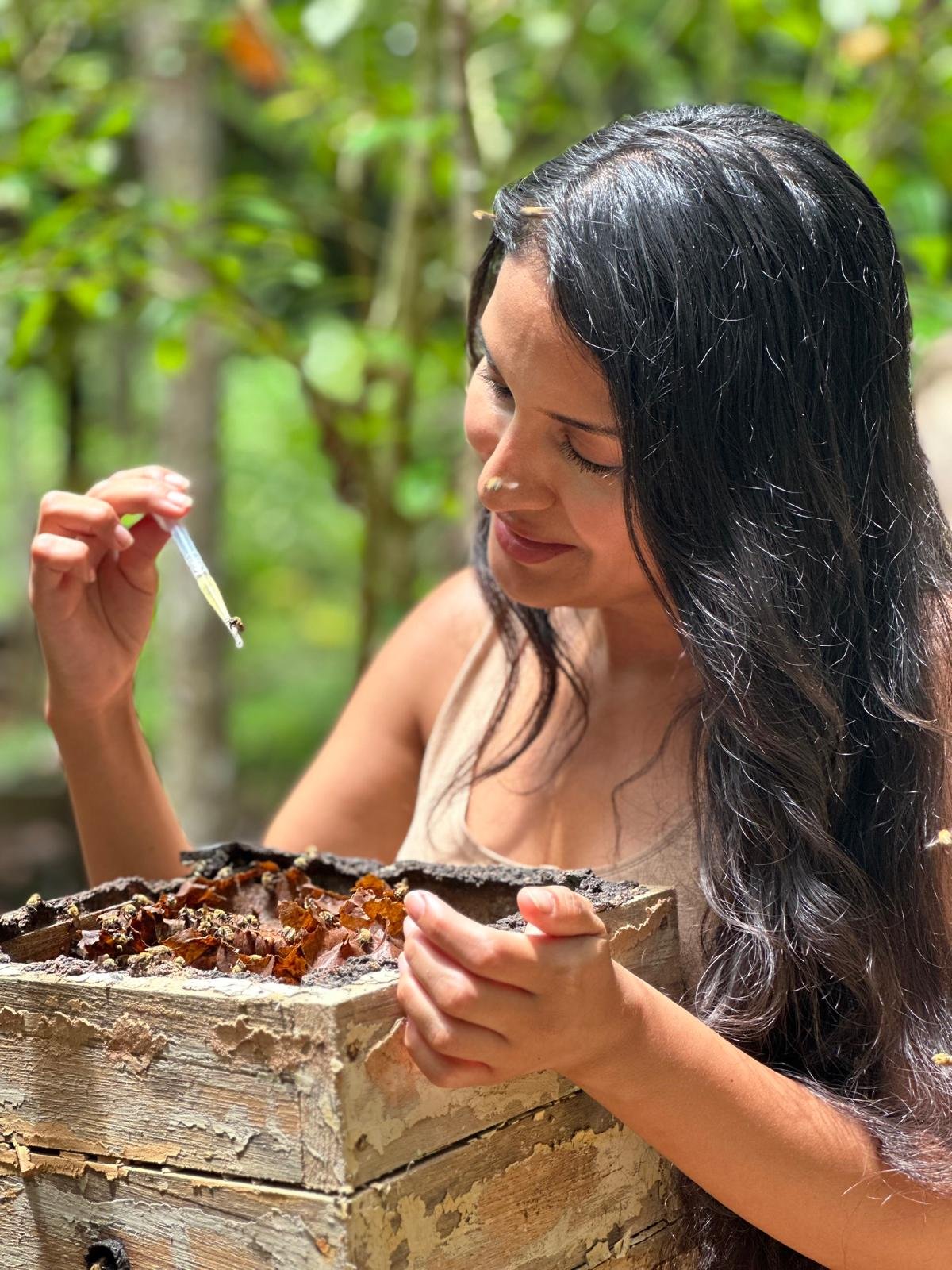
Photo by Sebastian Galdo-Stanguis
What was the process of earning legal rights for a bee species? How do you think this could be recreated for other species in other countries?
It wasn’t a linear process. It required science, but also storytelling, trust, and collaboration. We had to generate data to show their ecological importance, but equally important was working alongside Indigenous communities to bring forward their knowledge and lived experience. Then came the legal work — engaging with policymakers, translating science into something actionable, something that could exist within a legal framework. I think what made it possible was that it wasn’t just about protecting a species, it was about protecting a system - biodiversity, culture, livelihoods. For this to be recreated elsewhere, it must be locally rooted. There’s no one-size-fits-all model, but the principles remain: evidence, community leadership, and a shift in perspective that sees nature not as a resource but as a rights-bearing entity.
Some of your research focuses on the medicinal properties of flora and fauna in the Peruvian Amazon. What have been some of your most captivating discoveries thus far?
What captivates me most is not a single discovery, but the realization that medicine is everywhere and that many species already use it. There’s stingless bee honey itself, used for generations for eye infections, respiratory issues, infertility, and wound healing. From a chemical perspective, it’s incredibly rich and complex. But beyond that, what fascinates me is the interconnectedness of how the medicinal properties of honey are tied to the plants bees visit, to the health of the forest, to the continuity of knowledge across generations. It’s not just about compounds, it’s about relationships.
Your book, “The Spirit of the Rainforest,” was published just this past year. Do you have a favorite chapter or topic that you write about within the book? If so, why does it stand out to you?
That’s so hard to answer… writing the stingless bee chapter was special because of what was going on at the time and well after the book came out, including achieving the legal rights for stingless bees in Peru - a historic win for nature and the world’s first. Writing the luminescence chapter was fascinating, the idea emerged from an exploratory trip in the Amazon, and it felt as if we had opened a whole new way of seeing the world - through the language of light and the ability of wildlife to generate light at different wavelengths. Overall, I think what stands out is a sense of deep joy and wonder for our natural world, and a call for making science, conservation, and storytelling indigenous led in our own territories.
Learn more about Dr. Espinoza at her website! Follow the EMA blog for more interviews focused on environmental hope and action.