

How Lorde Remixes Environmentalism

LORDE @ Laneway Festival, Rozelle, NSW, Australia 2014
It’s so confusing sometimes…to be a “good” climate ally.
Fans at Lorde’s DC show in October 2025 were greeted at the doors with the option to complete a survey on recycling and sustainable fashion in exchange for a chance to win merchandise in a lottery. As a graduate student in public health, I feel compelled to complete every survey I come across, so I filled it out while my friends waited in line at the bar. The survey included questions on the frequency of fast fashion purchases, concerns about climate change, and beliefs about recycling and disposable items. Every Lorde fan with an Instagram account has seen photos of her reusable rainbow water bottle (which looks less like a natural rainbow and more like the iridescence on an oil puddle), so I wondered: was Lorde an environmentalist? How had I missed this?
I expected a quick answer. After the show, I Googled “Lorde climate activist.” The first hit was an interview with her from 2021.
“I’m not a climate activist, I’m a pop star,” she told The Guardian. “I stoke the fire of a giant machine, spitting out emissions as I go. There is a lot I don’t know.” At the same time, she acknowledged that her song Fallen Fruit, on the Solar Power album, was both a protest song and a love song for the planet. I read this not as a rejection of climate activism, but as an acknowledgment of imperfection. It signals a reluctance to align herself with a movement that can quickly veer into moral purity (a problem that, to be clear, is hardly unique to environmentalism and is prevalent in many social justice circles). I know from my own public health courses that while identity and behavior tend to be connected, they can also be distinct. For better or worse, we aren’t always exactly who we say we are. While Lorde may not consider herself a climate activist, her actions tell us a different story: that she is, at minimum, a climate ally, and a powerful one at that. Below are some examples of her eco-friendly behaviors as a pop star.
A Visit to Antarctica and A Scholarship for Climate Scientists
In 2019, Lorde embarked on a five-day trip to Antarctica with the Antarctica New Zealand Community Engagement Programme, an organization aimed at connecting New Zealanders with the remote continent.1 The expedition was driven by her growing concerns about climate change and her desire to see Antarctica before it turned to “slush.” She visited and spoke with scientists at an active research base and wrote about the experience in an essay for Metro Magazine. At one point, she asked scientists about their firsthand experiences with climate change and was surprised to find that many were hesitant to respond, deferring, instead, to the results of their research. While I understand the scientists’ approach, I also see it as a missed opportunity to personalize issues that, for a non-scientific audience, are often anesthetized by statistics.
Lorde returned from the trip and published a photographic book about her visit titled Going South. In her essay of the same name, she noted the double meaning.
“The colloquial meaning of the phrase isn’t lost on me – ‘To decline, deteriorate or fail,’ according to the Collins English Dictionary,” she wrote.
Proceeds from the book sale funded The Ella Yelich-O’Connor Antarctic Doctoral Scholarship, which aimed to support climate research and aspiring environmental scientists in the region.3
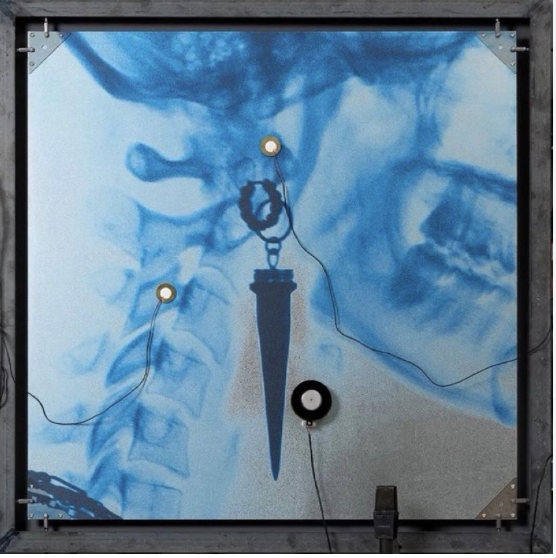
Pictured above: the poster, and reverb, from the Ultrasound World Tour.
A Partnership with REVERB
Lorde partnered with REVERB, a nonprofit aimed at improving sustainability in the music industry, for both her 2022 Solar Power World Tour and her current Ultrasound World Tour, to reduce the tours’ carbon footprints and minimize waste. REVERB has a number of artist partnerships, including Billie Eilish, Fleetwood Mac, Dead & Company, The Chicks, and BLINK-182 (among many others).
While data from her Ultrasound tour is not yet available, REVERB’s impact report on her 2022 tour found that 45 environmentally focused nonprofit partners were hosted at Solar Power shows, all merchandise used 100% upcycled cotton, and zero single-use plastic water bottles were used by Lorde, the band, or the crew. Additionally, Lorde partnered with Music Climate Revolution to dedicate a portion of her ticket sales to fund a range of global projects aimed at preventing or reducing greenhouse gas pollution.
It’s likely just a coincidence – but perhaps worth noting anyway – that the object framing Lorde’s Ultrasound World Tour poster is a reverb plate, a musical instrument from the 1950’s. Maybe it’s also a shoutout to REVERB.
A Lesson from Lorde
A key takeaway lesson from Lorde’s environmental advocacy might be that an artist’s activism needs not fit their aesthetic; while sunshine and the great outdoors seemed a natural accessory to the Solar Power album, the themes don’t flow as easily into her newer album, Virgin, with its technicolor laser beams and purring MRI machines. While she might not be promoting it as openly during this tour, her partnership with REVERB remains strong, as does her apparent commitment to the climate.
Reflecting on the show, I can see why Lorde – who at one point donned a light-up jacket as she walked through the crowd singing her fan-favorite, “David” – might hesitate to call herself an activist. Despite her history of advocacy, labels like this can open one up to criticism from self-proclaimed “better” activists – those who, for example, might see a fully illuminated jacket and be quick to uncover its environmental impact, and likewise, Lorde’s flaws as a member of the movement. Maybe it’s wise, in these cases, to act more and speak less. Or maybe, better yet, it’s time to tackle the glut of moral purity in activist spaces, and acknowledge that perfect really is the enemy of good.
In addition to her actions, though, and despite her one-time proclamation, Lorde has also spoken up for the climate directly: at her Solar Power tour in 2022, she turned to her fans and addressed the heat they were all experiencing.
“Don’t acclimatize to 112-degree weather, promise me that,” she said. “This is fucked up. It’s the defining crisis of our lives. And I am so fucking terrified for the future. But all we can do is be really present, try and vote with the climate in mind, and go outside. It’s the best thing.”
Follow the EMA blog for more articles on the intersection of pop culture and the environment!
Molly McGinnis is an MPH student and program coordinator in the Department of Epidemiology at The Milken Institute School of Public Health at The George Washington University. Her work has appeared in Guernica, The Sierra Nevada Review, CQ Researcher, JCO: Oncology Practice, and elsewhere.