

All the Greenification in Wicked: For Good
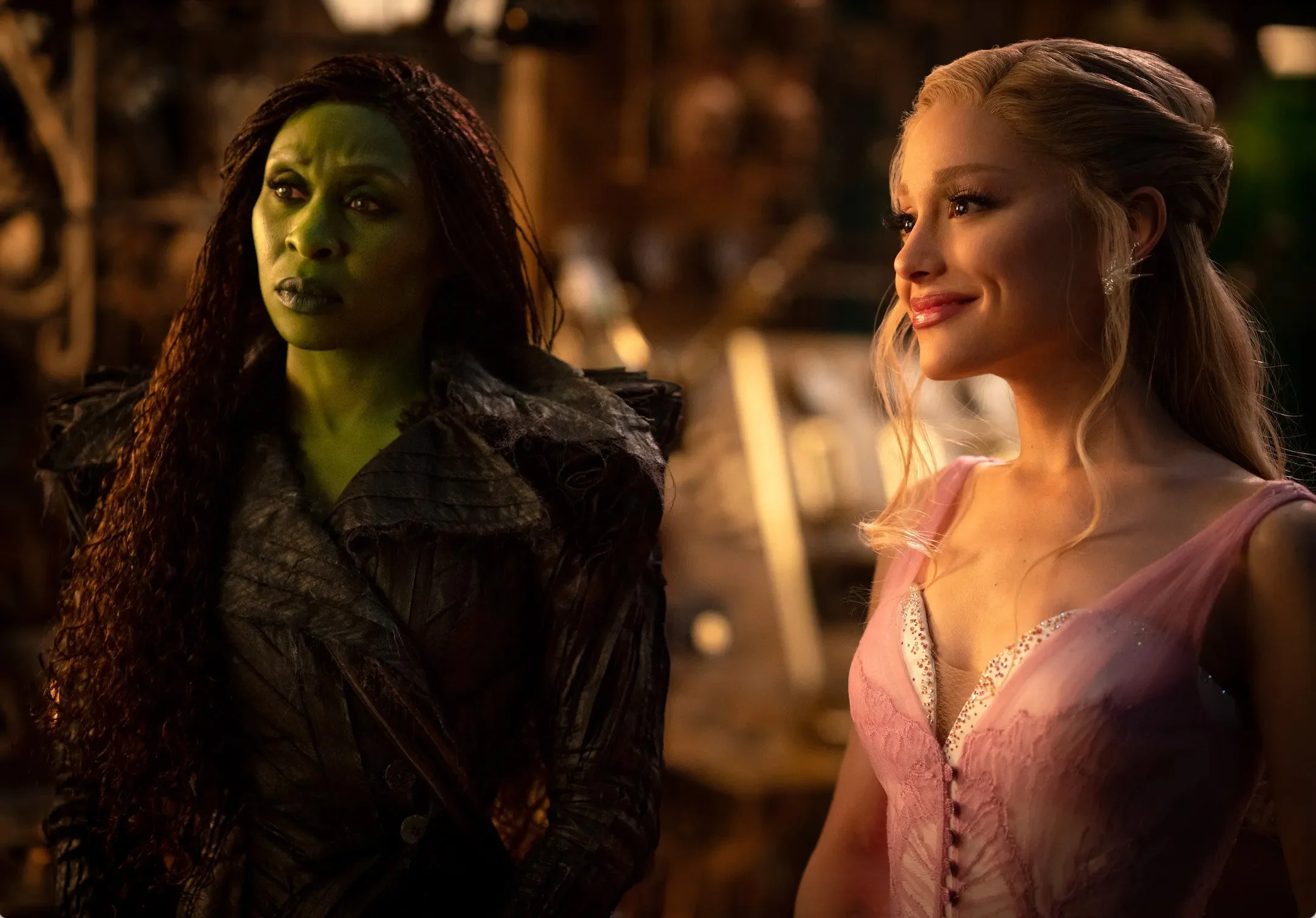
L to R: Cynthia Erivo is Elphaba and Ariana Grande is Glinda in WICKED FOR GOOD, directed by Jon M. Chu. PHOTO: Giles Keyte/Universal Pictures.
The Oscar-winning world of Oz is back for its second installment. Filmed at the same time as Wicked, Wicked: For Good has all the green from part one and more. The EMA Gold Seal approved production was the first project to be greenlit under NBCUniversal’s GreenerLight program, bringing nature and sustainability to the forefront on and off screen. Here are three ways Wicked: For Good greenfully honors our planet:
1. Green Storytelling
In Wicked: For Good, Elphaba, played by Cynthia Erivo, is a literal embodiment of green. Audiences can see her continue to protect and advocate for animal rights in Oz passionately. Right from the opening scene, Elphie intervenes to free the unicorn-looking bison from their forced labor under the not-so-wonderful Wizard (Jeff Goldblum), laying down the famous bricks for the Yellow Brick Road.
The lyrics of No Place Like Home, sung by Elphaba to the animals (understandably fleeing the persecution and animal cruelty), resonate like an anthem for regenerating biodiversity on Earth: ‘There’s no place like home / If we just keep fighting for it / We will win back and restore it / There’s no place like home’.
After poignantly asking in Wicked, ‘Can you imagine a world where animals are kept in cages and they never learn to speak?’, our green Goddess, despite being labelled the Wicked Witch of the West, uses her magic in the sequel to free imprisoned species caged and stripped of their speech by the Wizard.
Beyond wildlife conservation, elements of climate and the environment make subtle appearances in the script. Ariana Grande’s character, Glinda the Good, claims ‘Accidents will happen’, following Nessa (Marissa Bode)’s demise by storm-induced house flattening. However, Elphaba retorts, ‘You call that an accident? You think cyclones just appear out of the blue?’. In this case, Madame Morrible (Michelle Yeoh) was to blame for the ‘change in the weather’ but it’s a reminder that in real life, human-induced climate change risks intensifying and creating more frequent extreme weather events like The Great Drought experienced in Wicked. Climate change, like the Wizard’s permanent leave of absence, is ‘Not a rumor, a fact. The kind that is true’, in the words of Glinda.
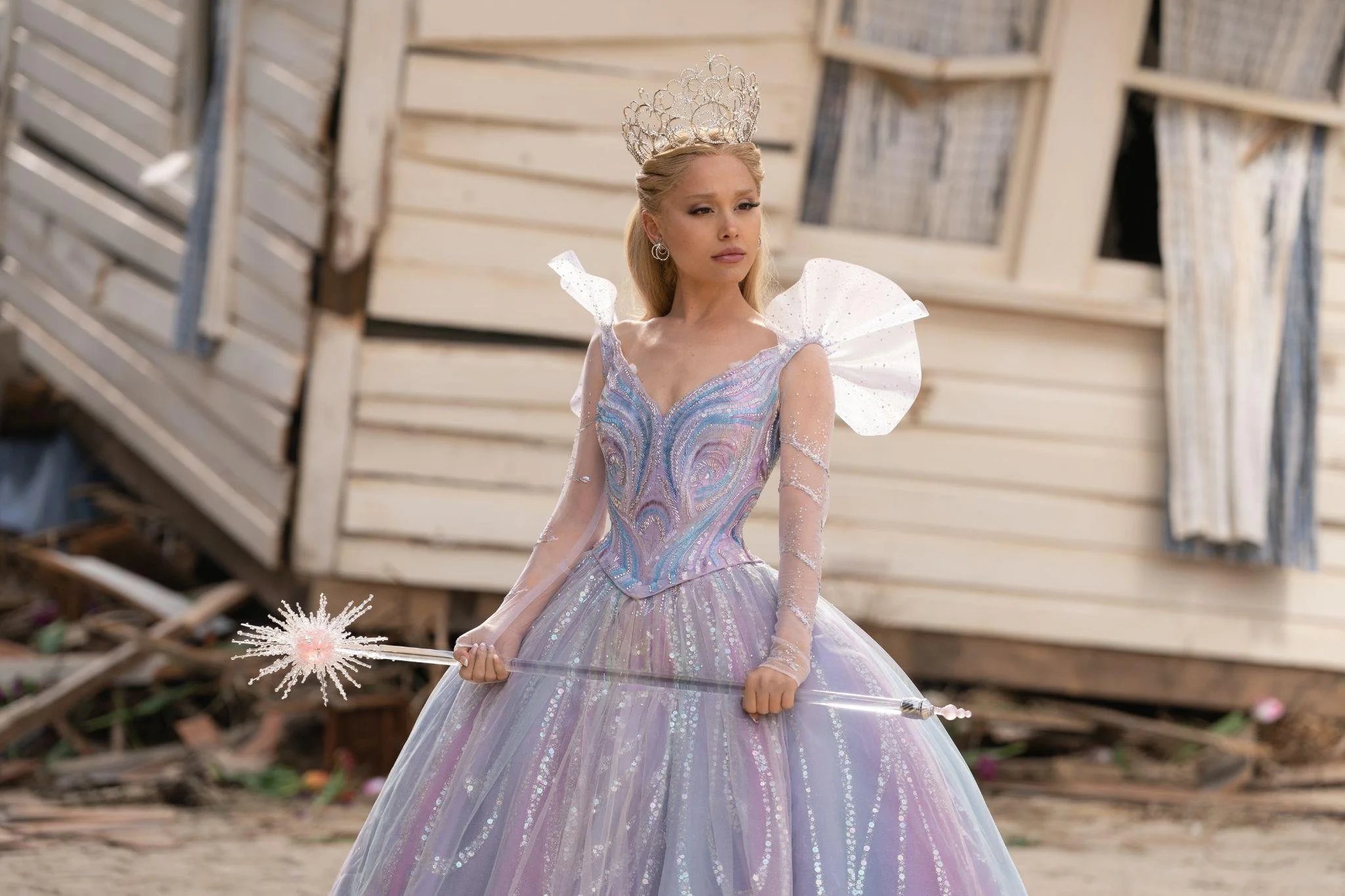
Ariana Grande is Glinda in WICKED FOR GOOD, directed by Jon M. Chu. PHOTO: Giles Keyte/Universal Pictures
The power of green storytelling extends beyond the screen. Wizard of Oz actor and EMA 2021 host, Jeff Goldblum, told The Morning he stopped eating red meat and poultry following the filming, particularly after conversations concerning animal cruelty. He therefore joins Ariana Grande and Cynthia Erivo, who are both vegan, on more plant-based eating.
2. Emerald-worthy Production & Costumes
Ensuring the green of Wicked was not just story-based, director Jon M. Chu explained, ‘to bring (the green ethos) to set itself was always very important to us’.
Production on Wicked: For Good (and Wicked) was duly greenified from the start thanks to NBCUniversal’s GreenerLight program, which promotes sustainability throughout filmmaking. With support from Sustainable Film, the production brought to the set the same environmental values upheld in the musical’s partnership with the Broadway Green Alliance (BGA).
I attended a virtual press conference with filmmakers and cast members who highlighted this work as well. Producer, Marc Platt, expressed how ‘It was very natural, and very empowering for all of us to make sure that we were working every day in a green environment’.
When I asked Ariana Grande about creating the sustainable magic behind the scenes, she lauded director Chu and production designer Nathan Crowley, sharing, ‘they’re the most thoughtful and extraordinary creatives in the entire world. So to be able to do this larger-than-life world building, and to do (it) in a sustainable way (…) is just so incredible.’ The actor continued, ‘Nathan Crowley, there’s no one like him, and talk about planting nine million tulips for one shot.’ Munchkinland’s multi-coloured rows of tulips were grown with the expertise of a local farmer who adopted the tulips after production.
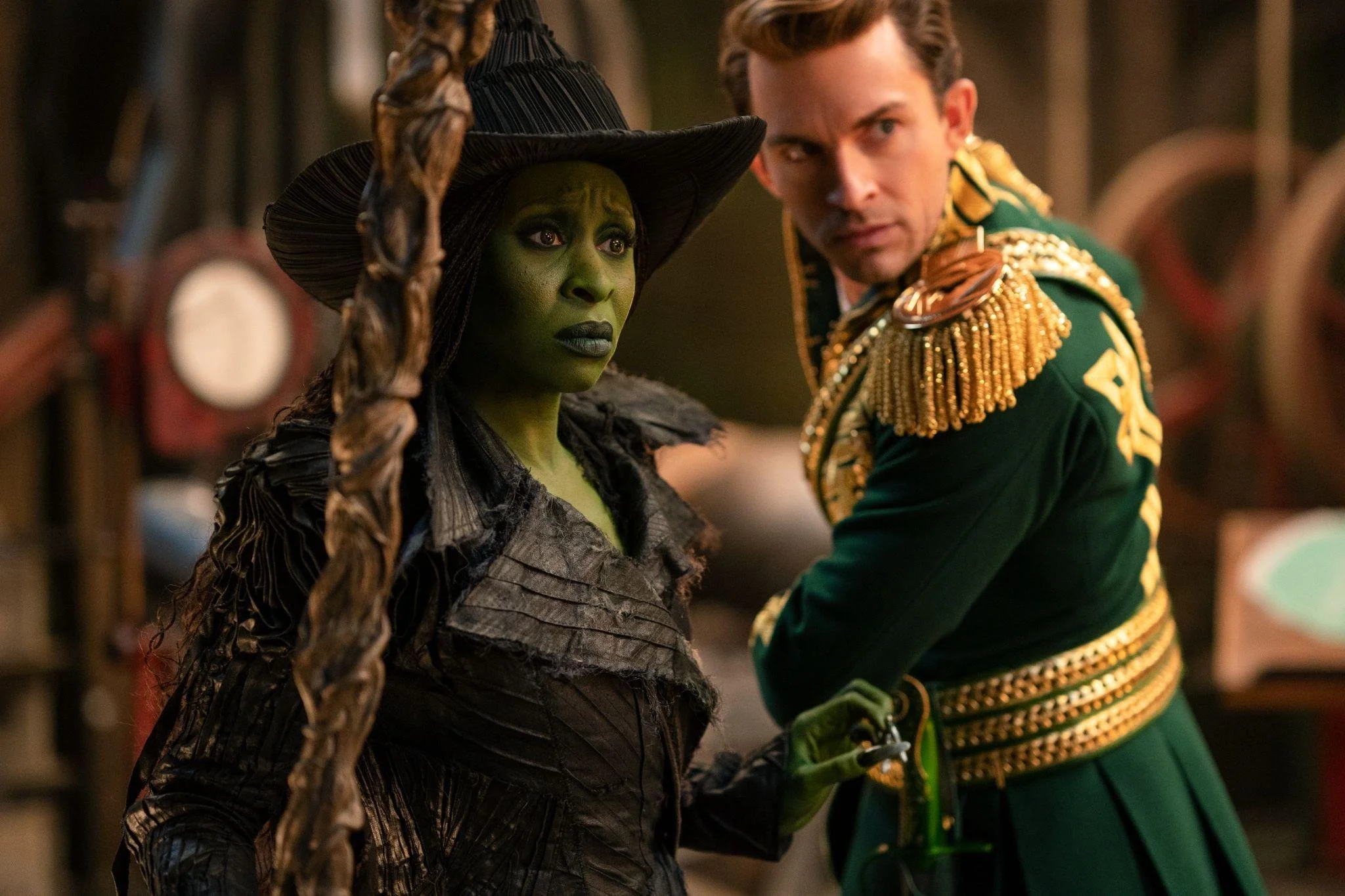
L to R: Cynthia Erivo is Elphaba and Jonathan Bailey is Fiyero in WICKED FOR GOOD, directed by Jon M. Chu. PHOTO: Giles Keyte/Universal Pictures.
On the costume side of creativity, Cynthia revealed the eco-friendly decisions made with costume designer Paul Tazewell, such as reusing and repurposing clothing in For Good and opting for organic, harm-free materials, which speak to Elphaba’s love for the animals. She added, ‘Some of it is for my eyes only, really and truly, but it’s there’. For instance, one of her dresses from Wicked was shredded to become a tunic under her coat in For Good.
For a deeper dive into the stats and how the cast and crew participated in Going Green Behind the Scenes, see here.
3. Green For Good Campaign
Wicked: For Good | Green For Good
Championed by GreenerLight and Universal Marketing, a Green For Good campaign was launched to inspire green off-screen, offering an array of toolkits and resources at BeGreenForGood.com, and bringing together audiences to take part in their #GreenForGood Challenge.
With Cynthia Erivo / Elphaba as its face, the Green for Good campaign is a social challenge encouraging moviegoers to bring the green home and take action for the environment and wildlife. For each #GreenForGood post you publish on Instagram, TikTok or X, a native tree will be planted through the Re:wild partnership (up to 2,000 trees before January 15 2026).
In a clock’s tick, you too can keep the green magic alive by:
Green-ifying Your Community
Protecting Our Wildlife
Taking Matterful Everyday Actions
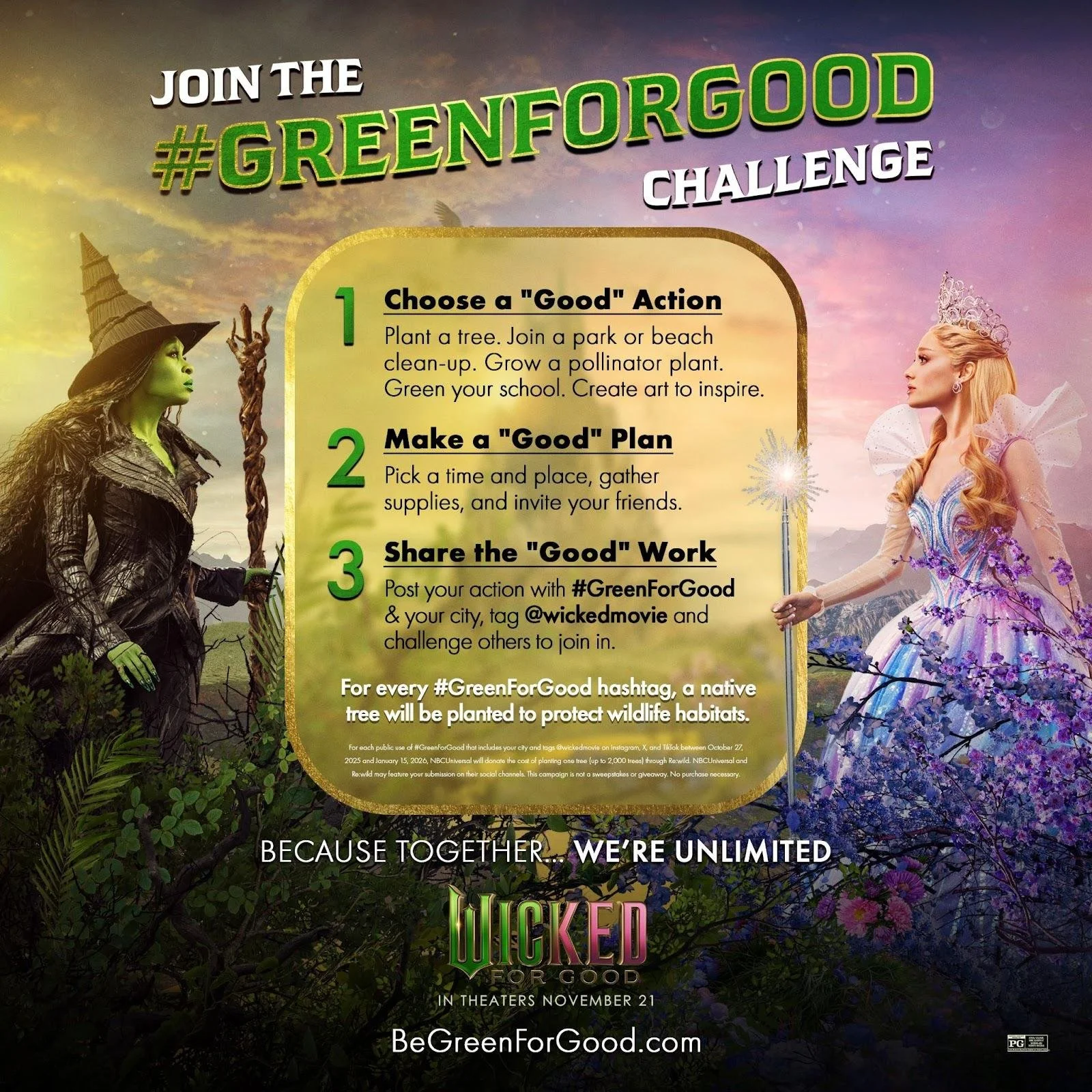
Enjoy the film and its unlimited #GreenForGood!
Cassie Jo is an entertainment journalist specializing in sustainability on screen. She holds a Master’s in Environmental Policy from Sciences Po and is also trained in sustainable production, climate communication and editorial strategy. In her spare time, she supports productions with her expertise as a sustainability coordinator.
This blog post was made possible by the EMA Creator Fund. Support our fund with a donation!